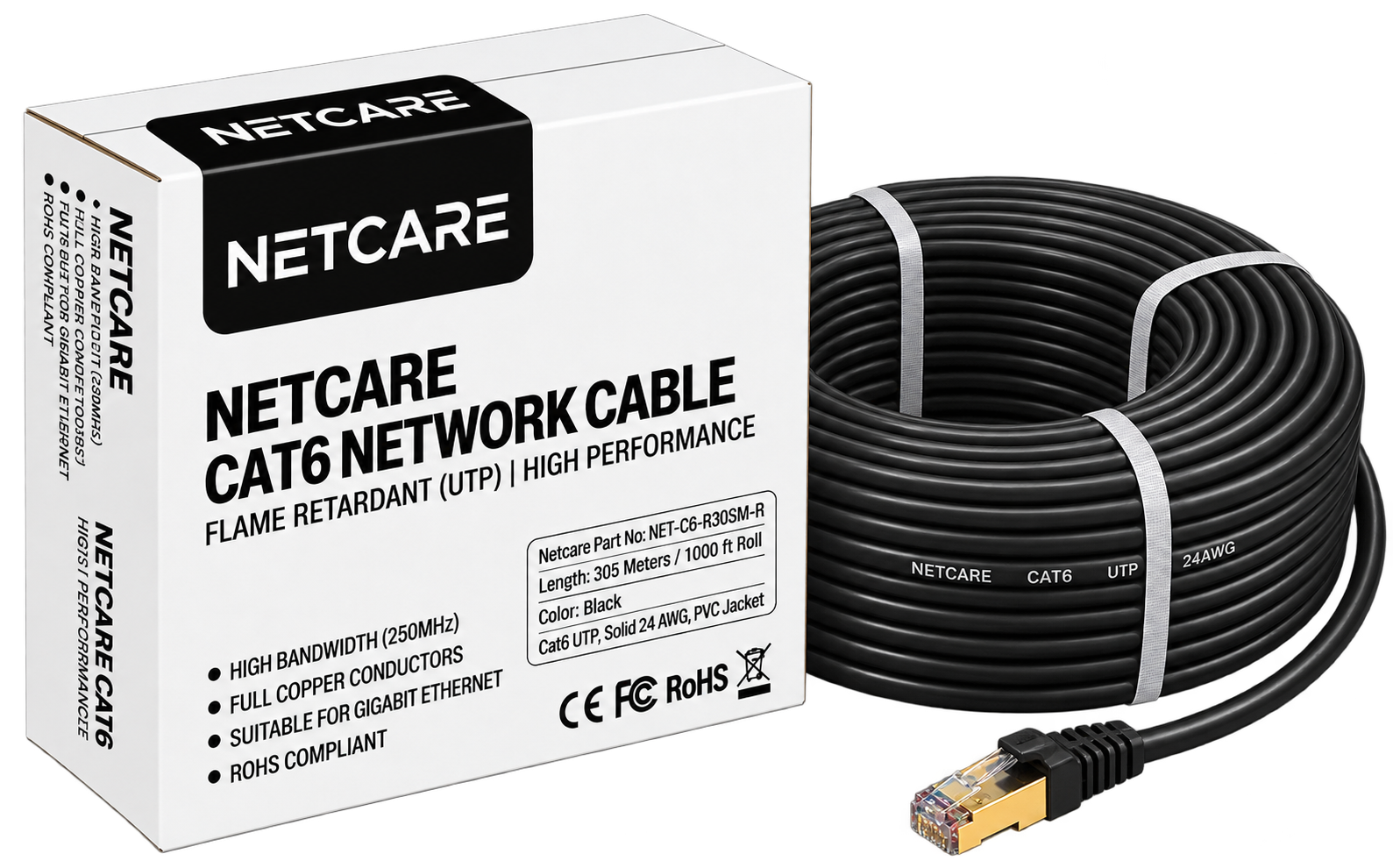
In an era driven by high-bandwidth smart automation, continuous 4K security streaming, and mission-critical cloud computing, the physical infrastructure of your network is just as vital as the hardware connected to it. While wireless connectivity offers convenience, structured Ethernet cabling remains the undisputed backbone of fast, stable, and secure data transmission. Among modern networking standards, Category 6 (CAT6) cable has established itself as the baseline requirement for reliable, future-ready connections in both residential and enterprise environments.
CAT6 cables are engineered to support data transfer speeds up to 10 Gigabits per second (10 Gbps) at bandwidth frequencies up to 250 MHz. Compared to older standards like CAT5e, CAT6 features tighter internal copper wire twisting and often includes a physical separator known as a spline. This structural precision significantly minimizes cross-talk and electromagnetic interference (EMI), ensuring clean signal integrity over long distances. Whether you are running power-over-Ethernet (PoE) IP cameras, linking multi-gigabit network switches, or connecting high-density smart home hubs, CAT6 delivers the ultra-low latency and zero-packet-loss reliability that wireless networks simply cannot guarantee. Investing in high-quality CAT6 cabling eliminates network bottlenecks today while giving your infrastructure the headroom to handle tomorrow’s bandwidth demands seamlessly.