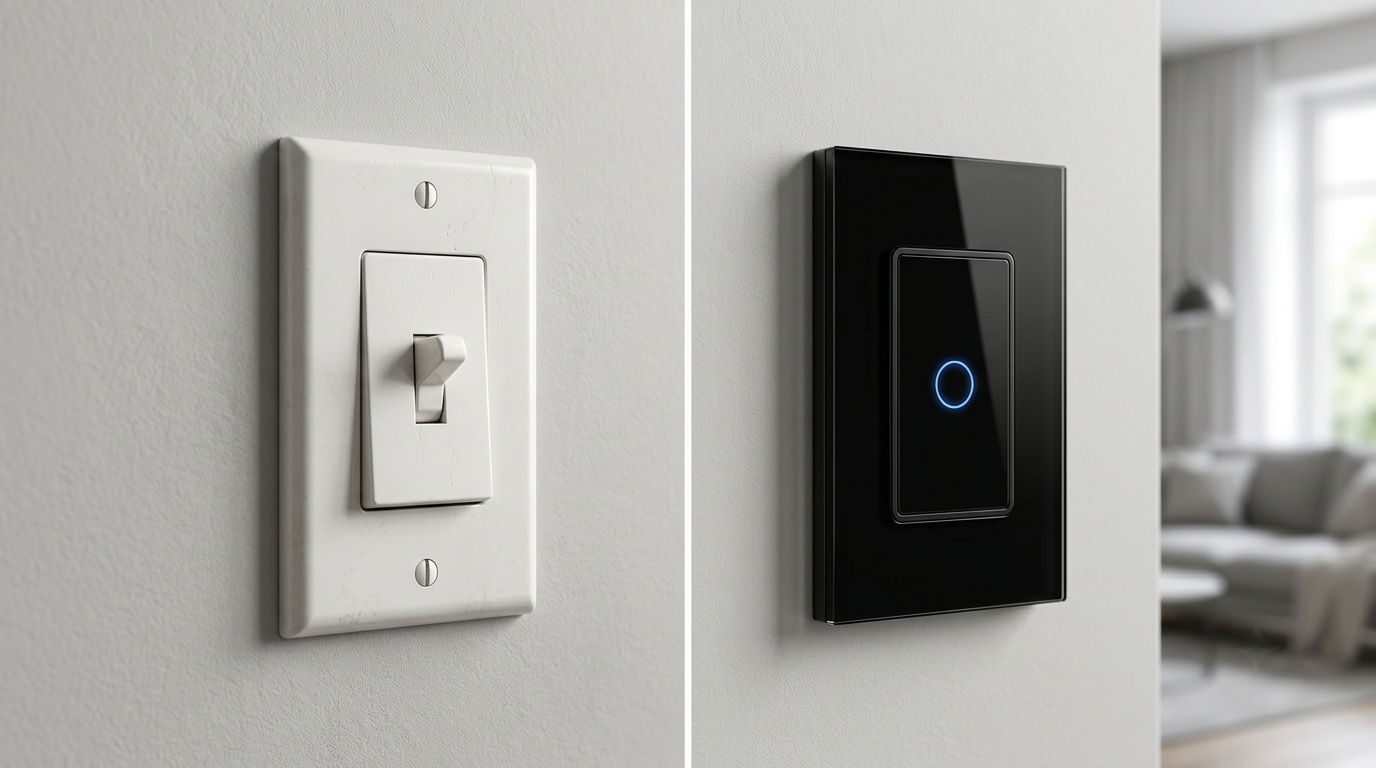
When designing a modern space, lighting control plays a crucial role in comfort, energy efficiency, and security. While traditional switches have been the standard for decades, smart switches offer an advanced alternative designed for today’s connected environments.
Traditional mechanical switches function simply as physical circuit breakers. Turning a lights on or off requires walking to the wall plate, offering zero automation or remote access. In contrast, smart switches integrate directly into your Wi-Fi or Zigbee network, allowing you to control lighting, appliances, and automated scenes through smartphone apps, voice assistants like Alexa and Google Assistant, or automated schedules.
Beyond convenience, smart switches elevate energy management. Many models feature built-in power monitoring, enabling you to track consumption and reduce electricity costs. They also integrate seamlessly into larger smart automation ecosystems, syncing with motion sensors, CCTV cameras, and automated curtain motors. For instance, you can program a “Good Night” scene that turns off all lights, closes the curtains, and arms your security system with a single tap.
While traditional switches offer basic reliability at a lower upfront cost, smart switches transform basic wiring into an intelligent control hub. Upgrading to smart switches gives you total control over your environment, enhanced security, and long-term energy savings.